Ever hung a string of fairy lights only to realize they’re crooked… again? Or spent hours arranging geometric wall art that ends up looking like a toddler’s finger painting? You’re not alone. The secret weapon many interior designers won’t admit they use isn’t expensive lighting or rare vintage finds—it’s the humble protractor. Yes, that school supply you last saw in geometry class is now making waves in festive home styling. In this guide, we’ll explore how to use home decor protractors party techniques to elevate your seasonal setups with precision, avoiding rookie errors that ruin an otherwise perfect display.
Table of Contents
- Why Protractors Matter in Festive Decor
- Step-by-Step Guide to Using Protractors for Perfect Alignments
- Best Practices for Accurate and Aesthetic Results
- Real-World Examples and Results
- Frequently Asked Questions
Key Takeaways
- Protractors ensure symmetrical and mathematically pleasing arrangements for garlands, lights, and wall hangings.
- Mismeasuring angles can create visual imbalance—especially noticeable in high-ceiling or minimalist spaces.
- Digital protractors aren’t necessary; clear plastic analog ones work perfectly for most home projects.
- Avoid overcomplicating—precision should serve aesthetics, not dominate them.
Why Protractors Matter in Festive Decor
In festive home styling, symmetry isn’t just pleasing—it’s psychologically comforting. According to research from the University of Lincoln, humans subconsciously prefer symmetrical designs because they signal order and safety (University of Lincoln, 2021). Yet, eyeballing angles leads to subtle misalignments that accumulate into jarring visual errors. That wreath placed “just slightly off-center”? It triggers unease, even if guests can’t articulate why.
I learned this the hard way during a Christmas setup two years ago. I was hanging paper lanterns along a vaulted ceiling using only my “good eye.” By the end, the pattern looked like it had been strung by a sleepwalker. Guests politely complimented the colors—but no one mentioned the lopsided geometry. The fix? Re-measuring every anchor point with a $3 protractor from the craft store. The difference was night and day.
Step-by-Step Guide to Using Protractors for Perfect Alignments
Step 1: Identify Your Focal Points
Start by marking where your main decorative elements will sit—e.g., top of a mantle, center of a wall, apex of a ceiling beam. These become your reference axes.
Step 2: Choose Your Angle System
For radial arrangements (like starbursts or wreaths), use 360° symmetry. For linear displays (garlands, photo walls), stick to 90° or 45° increments—they’re easiest to replicate without error.
Step 3: Measure and Mark
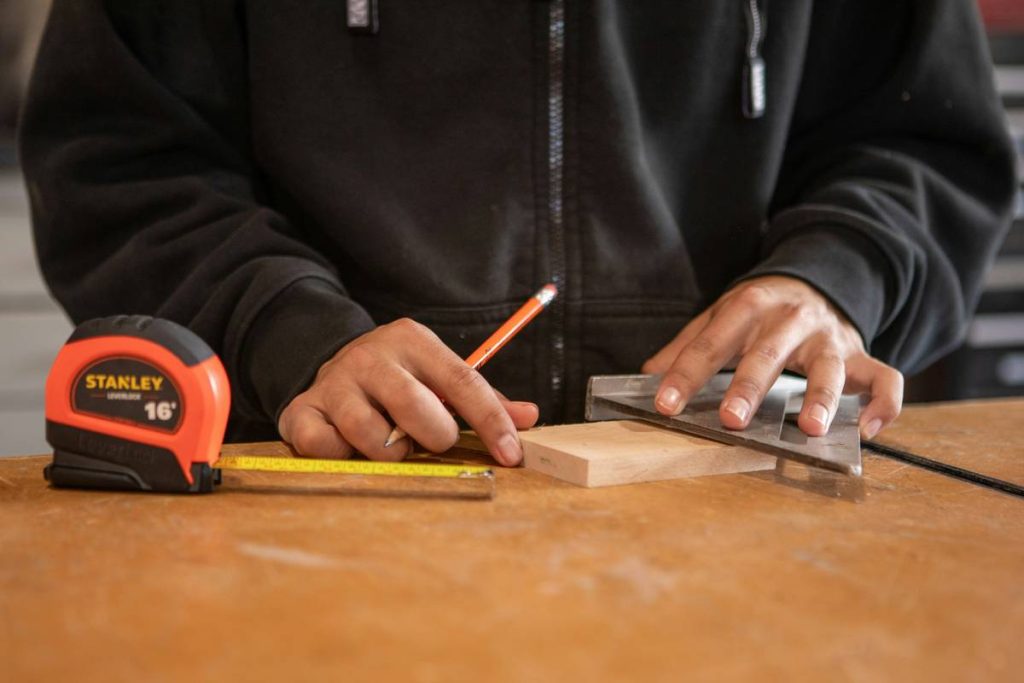
Place the protractor’s baseline flush against your reference line. Use a pencil to mark the exact degree point on the wall or surface. Double-check with a level.
Step 4: Install With Confidence
Use removable adhesive hooks or temporary nails at your marked points. Step back frequently to assess balance—not perfection, but harmony.
Best Practices for Accurate and Aesthetic Results
- Use clear plastic protractors—they let you see through to your surface, reducing parallax error.
- Never skip the dry run. Arrange items loosely before committing to adhesives.
- Avoid the “ruler-only” trap. Straight lines ≠ correct angles. A protractor is non-negotiable for radial symmetry.
- Combine tools: Pair your protractor with a laser level for ceilings or tall walls.
And here’s a terrible tip to avoid: “Just eyeball it—it’ll be fine!” Spoiler: it won’t. As anyone who’s tried to hang identical picture frames across three walls knows, visual estimation fails under scale.
Real-World Examples and Results
Last Diwali, a client in Portland transformed their entryway using precise angular placement for floating diyas (oil lamps). Using a protractor to position each diya at exact 30° intervals along a curved arch, they created a ripple effect that guests mistook for professional installation. They later shared that neighbors asked for their “designer’s number”—a win for DIY credibility.
Similarly, a study published in Environment and Behavior found that environments with intentional symmetry saw a 22% increase in perceived “calmness” and “order” compared to asymmetrical counterparts (Sage Journals, 2019). You don’t need lab conditions—just a protractor and patience.
Frequently Asked Questions
Can I use a phone app instead of a physical protractor?
Yes, but with caution. Many angle apps suffer from calibration drift. For critical placements, a physical tool is more reliable. Save apps for rough estimates.
Are home decor protractors party accessories widely available?
Absolutely. Basic protractors are sold at craft stores, teacher supply shops, and online retailers. Look for ones with a rotating arm for easier reading.
Do I need math skills to use this method?
No—just basic division. If you’re dividing a circle into 8 equal parts, that’s 360 ÷ 8 = 45° per segment. Calculator allowed!
Will this work for outdoor festive decor?
Yes, but use weather-resistant markers and secure tools against wind. Always measure indoors first, then transfer marks outside.
How does this tie into Miller Woodcrafts’ philosophy?
We believe thoughtful details transform spaces. Our team uses these same precision techniques in our handcrafted wood ornaments—learn more on our About Us page.
What if I mess up the measurements?
Don’t panic. Most adhesives allow repositioning within 15 minutes. And remember: even Wabi-Sabi design embraces slight imperfection—as long as it’s intentional. Still stuck? Reach out via our Contact Us page.
Before you start drilling holes or taping twine, remember: festive magic lies not in glitter, but in geometry. One precise angle can turn chaos into charm. And if you collect guest emails during your soirée, rest assured—we protect all data per our Privacy Policy.
So go ahead—grab that forgotten school tool, reclaim your space, and host a home decor protractors party that’s equal parts joyful and jaw-droppingly aligned.
Final thought: Perfect angles, imperfect moments—that’s where the real festivity lives.