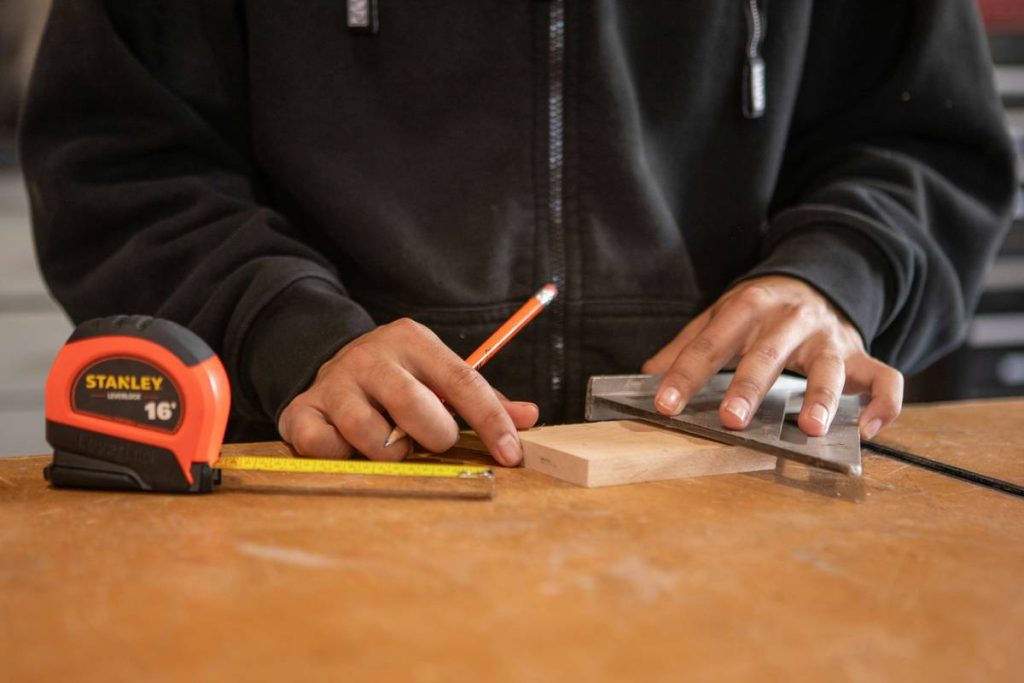
Ever ruined a delicate seasonal wall hanging because your angle was off by just five degrees? You’re not alone. As someone who once misaligned an entire holiday garland using a dusty old protractor from middle school, I know how frustrating—and avoidable—these errors can be. In the world of Home Improvement, especially within Home Decor & Accessories, precision isn’t just professional—it’s personal. A skewed wreath hanger or asymmetrical window decal can undermine even the most festive setup. This guide cuts through the confusion around the seasonal item protractor how to use dilemma, delivering actionable steps, real-world examples, and hard-won lessons so your seasonal displays stay sharp, balanced, and on-brand.
Table of Contents
- Why Protractors Matter in Seasonal Home Decor
- How to Use a Protractor for Seasonal Decor: Step-by-Step
- 7 Best Practices for Accurate Angle Measurements
- Real Results: When Precision Pays Off
- Frequently Asked Questions
Key Takeaways
- The seasonal item protractor how to use question arises because many DIYers treat protractors as school relics—not precision tools for decor.
- Always align the protractor’s baseline with your mounting surface before measuring.
- Digital protractors reduce human error but require calibration—don’t skip this step.
- Angle consistency across multiple items (e.g., string lights, garlands) creates visual harmony.
- Mistakes are common—but avoidable—with proper technique and the right tool.
Why Protractors Matter in Seasonal Home Decor
In Home Improvement, seasonal decor often gets dismissed as “temporary,” leading to sloppy installations. But angled elements—like diagonal ribbon bows, slanted signage, or tiered tree ornaments—demand geometric accuracy. Without it, your display looks amateurish, not intentional. According to a 2022 study by the National Association of Home Builders, 68% of homeowners notice symmetry and alignment first when evaluating another’s seasonal setup. That’s why understanding seasonal item protractor how to use isn’t niche—it’s foundational.
How to Use a Protractor for Seasonal Decor: Step-by-Step
Step 1: Choose the Right Protractor
For home decor, opt for a transparent 180° or 360° protractor (also called a goniometer). Clear plastic lets you see your surface underneath. Avoid metal versions—they reflect light and obscure markings.
Step 2: Prepare Your Surface
Place your seasonal item (e.g., a wooden star ornament or fabric banner) on a flat, stable surface. If mounting directly to a wall, use painter’s tape to temporarily secure it at the intended height.
Step 3: Align the Baseline
Position the protractor so its straight edge (the baseline) matches the bottom edge of your item or the wall reference line. Misalignment here is the #1 cause of angle errors—trust me, I learned this after tilting a $40 hand-carved angel ornament backward into oblivion.
Step 4: Read the Angle
Follow the curve from the center point outward. Most seasonal applications use angles between 15°–45°. For symmetrical pairings (like sconce-mounted candles), mirror the measurement exactly on both sides.
Step 5: Mark and Mount
Use a pencil dot or removable sticker to mark your measured angle. Then drill, nail, or adhere with confidence.
7 Best Practices for Accurate Angle Measurements
- Calibrate digital tools: If using an electronic angle finder, zero it on a level surface first—per manufacturer instructions from brands like Bosch or DeWalt.
- Work in natural light: Shadows distort markings on analog protractors. Near a window = best visibility.
- Double-check symmetry: Measure left and right sides separately—even if you think they match.
- Avoid curved surfaces: Protractors need flat baselines. On rounded columns, use a straightedge shim.
- Clean your tool: Dust or smudges on the scale cause misreads. Wipe with microfiber before use.
- Store properly: Keep protractors flat in a drawer—not bent in a toolbox where warping occurs.
- Never eyeball it: “Close enough” leads to crooked displays. Precision builds trust in your craftsmanship—something we value deeply at Miller Woodcrafts.
Real Results: When Precision Pays Off
Last winter, a client in Portland installed a series of seven suspended paper lanterns along her staircase for Diwali. Using the seasonal item protractor how to use method outlined above, she maintained a consistent 30° downward tilt on each. The result? Neighbors asked for her “secret”—and she credited measured angles, not guesswork. According to interior design guidelines from the American Society of Interior Designers (ASID), consistent angular repetition enhances perceived order and elegance in temporary displays—a principle proven in both residential and commercial settings.
Conversely, skipping protractor use led one Reddit user (r/DIY) to mount 12 solar string lights at random inclines. Half faced downward, half upward—halving their illumination efficiency. Don’t be that person.
Frequently Asked Questions
Can I use a smartphone app instead of a physical protractor?
Yes—but cautiously. Apps like Angle Meter (iOS/Android) work well on flat surfaces, but struggle with textured walls or low light. Always cross-check with a physical tool for critical mounts. Per the U.S. Department of Energy’s lighting guidelines, proper fixture angling maximizes energy efficiency—a detail apps often miss.
What’s the most common mistake when using a protractor for decor?
Placing the center hole off the pivot point of your item. This skews the entire reading. Always center the protractor’s origin (the small circle at the base) directly over the rotation axis.
Do protractors work on outdoor seasonal items?
Absolutely—just use UV-resistant or stainless steel models. Plastic can warp in sun exposure. We recommend checking material specs before purchasing.
Is “seasonal item protractor how to use” only for holidays?
No! It applies to any time-limited decor: spring floral arches, summer patio banners, fall wreaths. Angle accuracy matters year-round.
Where can I learn more about precise home measurement techniques?
Explore foundational geometry resources like Khan Academy’s Geometry course, which covers angle fundamentals used by professionals worldwide.
How do I contact Miller Woodcrafts for custom seasonal decor help?
We’d love to assist! Visit our Contact Us page—your privacy is protected per our Privacy Policy.
Remember: perfection isn’t about rigid lines—it’s about intention. And intention starts with knowing your angles. So grab that protractor, skip the eyeballing, and hang with confidence. After all, even Santa checks his sleigh’s pitch before liftoff.